Category Archives: Acupuncture

Nutrition and Cognition

An increasing body of scientific and clinical evidence show that brain health needs personalized and multi-pronged interventions to optimize health outcomes. Nutrition and cognition (thinking) are linked. More and more researchers are offering links demonstrating how poor nutritional intake adversely affects cognitive functioning and may, in fact, contribute to various neurological conditions including anxiety, depression, autism and neurodegenerative disorders. Data are indicative that these links may begin before birth, continue throughout the life course and be particularly susceptible during times of inadequate or inappropriate nutritional intake, physiological changes or increased stress.

Many scientific sources confirm evidence of the gut-brain axis, its association to nutrition, and how it influences cognitive health throughout life—from birth into later years. These include:
-The links between stress, chronic inflammation, nutrition and cognitive health
-The critical role nutrition plays in gut and neurological health
-How to leverage specific nutritional solutions to optimize gut-brain outcomes for health conditions

Stress and Managing Stress

Stress and Managing Stress

Dr. Jay Sordean talking about Stress and Managing Stress on KREM2 Spokane with Rose Beltz, Health News Reporter.

Stress and Stress Management, Because Stress is Pervasive

Stress is a response to external and internal changes in our environment and how we perceive of it.

We both react and respond to stressful situations.

“Reaction” is more automatic and unconscious.

“Response” is more mediated, less automatic, and tempered by conscious and learned beliefs and behaviors. Response modifies and can reduce a severe stress reaction like panic attacks.

There are several types of stress response and reactions:
• Mental
• Emotional
• Physical
• Spiritual
• Energetic

The deepest basis for our bodily reactions and responses to external and internal changes is our need to survive.

It is both our individual survival and our survival as a family, tribe, and species that drives stress behavior.

The survival stress reaction is called the “Fight or Flight” response. This is deeply seated in our survival brain and is body based. Strong hormones surge through the body and effect breathing, heart rate, digestion, thinking, emotions.

The most common stressors, according to statistics, are:
• Death of a loved one
• Divorce
• Loss of a job
• Increase in financial obligations
• Getting married
• Moving into a new home
• Chronic illness or injury
• Emotional problems (depression, anxiety, anger, grief, guilt, low self-esteem)

Stressful, or even life-threatening situations include:
• Threat of physical harm
• Threat of freezing or of burning up
• Threat to our loved ones (children, parents, family, friends)
• Unhealthy living situation – like mold in a house
• Toxic relationships
• Changes in intimate relationships
• Divorce, break-up, infidelity
• Abusive relationships
• Toxic work environment (chemicals, people, activities)
• Negative self-talk

These are a few of the many solutions to help empower you to become stress-responsive versus simply stress-reactive

• Fixing up dangerous housing environment (mold abatement, getting rid of drug infested nuisance properties, reducing crime statistics with better job opportunities) (contact www.TwinHomeSolutions.com for help if you have bad homes in your neighborhood)
• Learning breathing exercises, visualization exercises, empowerment (like “fist pump”)
• Doing yoga, meditation, Tai Qi, Qi Gong (we can demonstrate that for you)
• Using BANK Code personality typing to communicate better with your loved ones or spouse (go to www.Four-Cards.com to get your free $97 value gift of a personality analysis from Dr. Jay)

Valentine’s Day Hints

Valentine’s Day Hints – Tips on Speaking to your Lover Partner Spouse


Each person has a preferred way to be spoken to.  How you touch and play the “heart strings” of those you love and care about differs according to many factors.  Their personality type and what they most deeply value are two important elements that drive their feelings and behavior.  When you are able to hit upon the messaging that works for them, that creates their “symphony” and inner “singing” (like that song that you just can’t stop singing to yourself at times that lights you up), you will create a harmony and positive response.  Closeness and trust are likely to follow.


Valentine’s Day Hints

Valentines Day is an important day to many people, whether they celebrate or not.  Because it goes on around us, even if we poo-poo, it there is a social context we operate in.  As social beings (even if we are introverts), humans are touched by the social fabric we are brought up in and wear culturally.  The excitement and trepidation of “getting it right” and feeling special on Valentine’s Day has at least a little effect on each of us.  This may be conscious or subconscious, or both. It might only be a 10% influence or it might be 150%.  No matter the degree, our emotional intelligence picks up on it to some extent.

Thus, we might as well give it a little attention.

If you know the predominant personality type of your loved ones, or wished for “person of interest,” you are more likely to vibrate their heart strings in a positive way.  That is good for them, for you, and for society as a whole.  If you don’t know the predominant personality, figure it out by playing the BANK code cards at www.Four-Cards.com.  Then, use the following as some Valentine’s Day hints and tips.

The BLUEPRINT likes routine and safety.  Plan out the Valentine’s Day event in advance and let them know what to expect – at least 1 week in advance. During the event or after giving them a lavish gift be prepared to justify the cost by mentioning any discount you were able to negotiate! It may sound odd, but they appreciate a good deal.


The ACTION loves fun and excitement. Sponteneity is a common value, so even if you plan out the event make it a surprise or at least surprise them with something during a planned event.  And tell them how fun they are! Brand name gifts are especially spot on.


The NURTURING is often about others.  Emphasize the relationship. Talk about the two of you – how much you trust them and how much their caring for others means to you.  Maybe attend a charity event related to Valentine’s day or make a donation to their favorite cause (in addition to giving them something).


The KNOWLEDGE is usually pretty logical and has some emotional intelligence challenges.  Explain to them the logic and rationale of going to the event together – maybe consider something related to science or even a comicon-like costume party.  Watching reruns of “Big Bang Theory” or “Scorpion” or going to the most recent “Star Wars” movie would be a great match to get them excited.

These Valentine’s Day hints and tips are not set in stone, but they might help you create the kind of event that is memorable – and that is the point of Valentine’s Day (besides the commercial aspects that predominate so much of it).

Keep in mind that BANK Code personality typing has applications far beyond Valentine’s Day.  It is being applied in education, business, and clinical settings to improve student performance, sales statistics, and treatment outcomes.  Trainings are available online and in person – contact the author for the options you are looking for to improve communication and results.

Opioid Addiction

Opioid addiction

Opioid addiction is at all time highs in the US. Television, radio, magazines, newspapers, blogs, and politicians are all ranting about the opioid addiction problem in this country. The basis of this addiction is typically a pain condition that was initially treated with opioids like oxycodone – supposed to be a short term therapeutic regimen – but that turned into long term dependence.

Alternatives exist – such as acupuncture to increase endorphins in the brain, and NRCT (Neurologic relief center technique) that may be helpful to reduce the nerve irritations that can cause pain syndromes not addressed in other ways. Mindfulness, hypnotherapy, guided imagery and a variety of natural supplements can also be effective interventions to replace the addictive opioids or to reduce the dependence over time.

THE OPIOID ADDICTION EPIDEMIC STATISTICS

By far, the opioid crisis is one of the worst epidemics to hit the United States.

More than 2.4 million Americans have reportedly abused opioid medications, many of which are formulated to match pain-reducing properties of opium, including legal painkillers like morphine, oxycodone, and hydrocodone.

Others have turned to heroin and fentanyl.

Making it worse, according to U.S. governors, as noted by NBC Chicago:

“The federal government needs to do more to block illicit versions of synthetic drugs such as fentanyl from being shipped into the U.S. Last year, the Department of Justice issued indictments of two Chinese companies accused of sending fentanyl illegally into the U.S., one of several anti-opioid moves by the federal government.”

It’s gotten so bad that since 1999, the number of accidental deaths involving opioids has quadrupled. In fact, it’s been reported that 91 Americans die every day from it.

In 2015, 52,000 Americans died from opioid abuse.

According to The U.S. Council of Economic Advisers (CEA):“CEA estimates that in 2015, the economic cost of the opioid crisis was $504.0 billion, or 2.8 percent of GDP that year. This is over six times larger than the most recently estimated economic cost of the epidemic.”In 2016, that number exploded to 63,600. In 2017, early data has it up to 66,000.

It’s why President Donald Trump declared the opioid crisis a “public health emergency.”

“We have to be careful because there’s a drug epidemic the likes of which we’ve never seen in this country,” he added. “I will be pushing the concept of non addictive painkillers very, very hard. We’re going to be spending lots of money on coming up with a non-addictive solutions.”

ALTERNATIVES TO OPIOID ADDICTION AT THE REDWOOD CLINIC

Alternatives exist – such as acupuncture to increase endorphins in the brain, and NRCT (Neurologic relief center technique) that may be helpful to reduce the nerve irritations that can cause pain syndromes not addressed in other ways. Mindfulness, hypnotherapy, guided imagery and a variety of natural supplements can also be effective interventions to replace the addictive opioids or to reduce the dependence over time.

The functional medicine approach is also very important to get your body’s systems back into balance.

Opioids severely alter the digestive and elimination systems. They are the basis for getting nutrition in your system and the foundation of a healthy immune system. When those are malfunctioning, the brain also is effected directly, and then the natural opiates produced by the brain and elsewhere, the endorphins and enkephalins are thrown out of balance. As are the feel-good biochemicals of serotonin and dopamine.

To break the addiction cycle the body’s natural feel good and pain reducing chemicals must be activated. Functional medicine is the most effective approach for this as it reduces dependence on pharmaceutical agents that cause numerous side effects.

Call us today at The Redwood Clinic +1-510-849-1176 to set up your functional medicine consultation. Delay only makes the addiction worse.
Secret Shopper

Secret Shopper

Let’s pretend that you are getting paid at some job. Maybe in a store in a mall. A secret shopper comes in to see if you can sell something to them. You get paid whether they buy or not. The secret shopper gets paid no matter what happens. For you, it is just a game and everyone comes out with money in their pocket.

I just got another message from an insurance company. They are announcing the continuation of their secret shopper program. Another thing to have to read. Another wasted amount of professional time to deal with some bs regulation. From a company that cheats its providers out of fees needed for the providers to pay overhead. You think I am kidding? Not at all.

In the mall store situation everyone gets money in their pocket during the secret shopper charade.

But in the medical insurance world, the policy wonks and the insurance executives make up rules, getting paid all the way to the bank. The providers that they make up the rules for? It is all just a giant waste of time. They don’t get paid and yet have to take their valuable time to talk on the phone to someone who is just making a fake call, to make a fake appointment for a situation that is a lie. The caller doesn’t really need an emergent appointment or even an less urgent appointment. They are getting paid to essentially hassle the provider and their staff. They waste valuable clinical time and take money out of the pocket of the provider.

Do the insurance carriers care? Is it really necessary? No. Is it just a way for the insurance company “compliant officer” to justify their high salary? More likely.

Nowhere else in the commercial world does this happen.

Well, the insurance carriers are now making huge amounts of money for “administration” of medical treatment. The CEOs and the bean counters make huge salaries. Where do the funds come from? From the payments to providers. The people who have spent time and money to get their expertise to help patients. The people who are actually providing the services. The administrators — just middle people taking a huge cut out of the money that should be going to real patient care.

Unlike the administrators, CEOs, “compliance officers,” government regulators, most providers like acupuncturists and chiropractors and massage therapists don’t have jobs. They don’t get a salary.
They only get paid if they see a patient. If they are lucky, they have an all cash practice so they don’t have to deal with the insurance payment system. Because if they deal with the cumbersome and wasteful insurance administration systems, even if legitimate services are provided, the insurance company decides whether they will get paid or not. And the payments are now, in 90% of cases, 50 -80% less than they were 20 years ago.

Then we get this new rule that insurance companies impose on providers, who are not paid enough to cover overhead and still make a middle class income. Seriously, I hear about the struggles daily for almost all practitioners.

Once again, the provider squeezing insurance middle men are warning again about the “secret shoppers” who will call. The “secret shopper” model is used in which the surveyor calls the practitioner’s office as a potential patient to see how soon he/she can schedule an appointment. Practitioners are surveyed for their accessibility to treat a patient with an urgent (emergent) condition and a patient with a non-urgent (routine) condition.

Many of these calls are from people who won’t even provide any insurance information on the phone. Supposedly the provider still has to provide an appointment. And if they don’t show up? Tough luck provider. You were just suckered by an insurance company’s “secret shopper” sham.

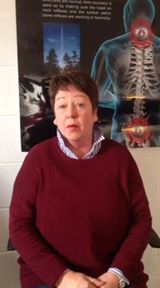
Lesley was in a car accident over a year and a half ago, since then she has had pain and restricted movement in her neck and pain and stiff

Lesley was in a car accident over a year and a half ago, since then she has had pain and restricted movement in her neck and pain and stiffness in her back. She tried all kinds of therapies but nothing seemed to work for her, i fact after months of therapy she felt she was no better at all. That was until she discovered acupuncture. So many people like this get great results at The Redwood Clinic with Dr. Jay Sordean.

World: ‘Tom & Jerry’ are not real Like page for more video <3

World: ‘Tom & Jerry’ are not real

Like page for more video <3